
How to Book Wheelchair Transport With Confidence
19 August 2026 — a few corrections are needed: pricing, the scope of driver assistance and confirmation of optional services. The wheelchair-capacity explanation is already appropriate.
A late flight, unfamiliar streets and heavy luggage can make any arrival tiring. For a wheelchair user, the difference between a comfortable journey and a stressful one often comes down to the details confirmed before the vehicle arrives. Knowing how to book wheelchair transport means asking for a genuinely adapted vehicle, sharing the right information and receiving a clear plan for collection, journey time and price.
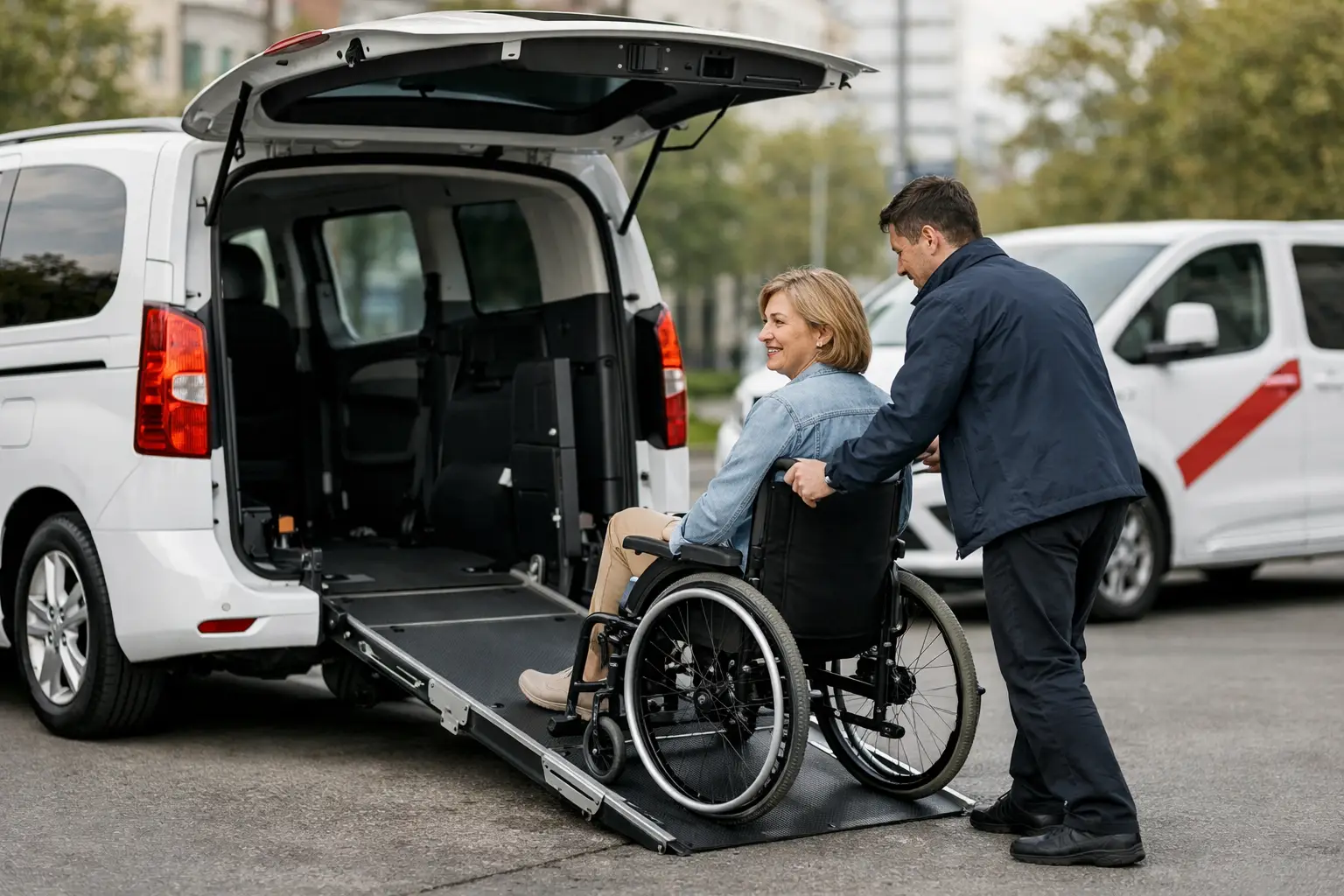
A wheelchair-accessible journey should never rely on assumptions. The vehicle must have suitable access equipment, adequate interior space and appropriate wheelchair and occupant restraint systems when the passenger remains seated in their chair. Just as importantly, the driver should understand how to assist respectfully, communicate clearly and allow enough time for a safe, unhurried boarding process.
How to Book Wheelchair Transport Before You Travel
The best time to arrange wheelchair transport is as soon as your key travel details are known. This is particularly true for airport collections, hotel transfers, events, medical appointments and long-distance journeys, where adapted vehicle availability and timing need to be coordinated carefully.
Start by contacting an official licensed taxi or private transfer operator directly. A direct conversation by WhatsApp or enquiry allows the operator to confirm that the vehicle offered is appropriate for your specific wheelchair and journey, rather than simply labelling a vehicle as accessible.
Share your collection point, destination, preferred date and time, plus any fixed commitments such as a flight arrival, cruise departure, meeting or theatre booking. For airport travel, provide the flight number as well as the scheduled arrival time. Ask whether flight monitoring is included and how collection will be adjusted if your arrival is delayed.
Confirm that the vehicle is truly wheelchair adapted
Not every spacious van can carry a passenger safely while they remain in their wheelchair. Some vehicles have room for a folded wheelchair only, while others are designed with a ramp or lift, anchoring points and occupant restraint equipment for travel in the chair.
Be specific about what you need. If the passenger will transfer into a standard seat and the wheelchair can be folded, say so. If the passenger must remain seated in the wheelchair throughout the journey, that must be confirmed when booking. This affects the vehicle configuration, the number of other passengers who can travel and the luggage capacity.
A properly adapted vehicle should provide secure access and a stable, dignified journey. It should not involve improvised lifting, uncertainty at the kerb or last-minute changes to the travel plan.
Give accurate wheelchair dimensions and weight
Wheelchairs vary considerably. A lightweight manual chair, a powered chair, a mobility scooter and a specialist seating system each require different space and loading arrangements. Accurate measurements help the operator assess the right vehicle from the outset. Do not assume that every mobility aid is suitable for occupied travel.
Provide the wheelchair's width, length and height, ideally measured at its widest and tallest points. For occupied travel, also provide the passenger’s seated height and the combined passenger-and-chair weight requested by the operator to assess access and loading limits. If the chair is powered, share its approximate weight and whether the battery is removable or fixed. Mention headrests, elevating leg rests, oxygen equipment or any attachments that change the space or handling required.
This is not unnecessary administration. A few clear details help prevent a vehicle from arriving with insufficient ramp capacity, interior height or securement space.
Explain the level of assistance required
Ask what assistance the driver can provide with boarding, luggage and positioning, and confirm it before booking. Do not assume that personal care, manual lifting or assistance transferring between a wheelchair and a vehicle seat is included. Let the operator know whether the traveller can board independently, will travel with a family member or carer, or needs additional support.
It is sensible to be clear about mobility needs without feeling obliged to share private medical information. The useful details are practical: whether the passenger stays in their chair, whether steps are difficult, whether there is a preferred side for boarding, and whether a companion will assist.
For collections from a hotel, residence or event venue, mention any access issues at the entrance. Narrow streets, steep driveways, underground car parks and pedestrian-only zones can affect the closest safe collection point. A professional operator can suggest a practical alternative in advance.
Information to Include in a Wheelchair Transport Booking
A complete booking request allows the transport team to confirm the service without repeated messages. Include the following details in one clear message:
- Collection date, time and full address, including hotel name or terminal where relevant.
- Destination and any planned stops on the way.
- Flight or train number for an arrival collection.
- Number of passengers, including children and companions.
- Wheelchair type, dimensions, weight and whether the passenger remains seated in it.
- Seated height and combined passenger-and-chair weight where needed to assess vehicle suitability.
- Number and size of suitcases, especially large cases, sports equipment or additional mobility aids.
- Assistance required and any access notes, such as a step-free hotel entrance or a preferred meeting point.
If your plans involve several journeys, send the full itinerary. A day in Madrid might include a hotel collection, a business meeting, lunch, an evening event and a return journey. For longer trips to destinations such as Toledo, Segovia or elsewhere in Spain, a detailed itinerary makes it easier to arrange comfortable timing, rest stops and a vehicle suitable for the whole day.
Ask About Price, Waiting Time and Payment
Transparent pricing matters because wheelchair transport is often booked around time-sensitive travel. Before confirming, ask which service is being booked, how the fare is calculated and whether any amount provided is an estimate or an agreed total.
For licensed taxi journeys, confirm the applicable regulated fare, including whether a meter or an applicable fixed tariff will be used. For other private transport services, request a quotation reflecting the itinerary and booking conditions. Booking ahead or requesting an adapted vehicle does not by itself determine the pricing model. Ask which waiting allowances and other charges apply, and ensure any taxi supplements follow the applicable tariff rules.
Also confirm the payment method and whether you will receive booking confirmation with the collection details. You should know who to contact if your flight is delayed, your meeting runs over or you cannot locate the driver at a busy terminal.
The lowest quoted price is not always the best value if it leaves essential questions unanswered. A reliable service is one that confirms the adapted vehicle, timing, passenger requirements and fare structure before the journey begins.
Booking Airport Wheelchair Transport
Airport transfers deserve particular care because arrival times can change without warning. Book with your flight number, airline, terminal and destination, then ask how the driver will meet you after landing. Meeting arrangements should be simple, specific and appropriate for the airport's permitted collection areas.
Allow for immigration, baggage reclaim and the time needed to collect mobility equipment. If you are travelling with a manual wheelchair checked into the hold, say whether you expect to use an airport chair until your own chair is returned. Confirm where airport assistance ends and the driver’s agreed assistance begins. This helps avoid confusion about the timing and location of vehicle collection.
For departures, book a collection time that accounts for traffic, airport check-in requirements and the extra time sometimes needed for assistance at the terminal. A door-to-door adapted transfer removes the need to change between crowded services while managing bags and equipment.
When You Are Travelling With Family or a Group
Wheelchair access changes how vehicle capacity is calculated. A van may carry up to six passengers in one layout, but a wheelchair positioned securely inside can reduce the number of available seats or luggage space. Confirm the full party size before accepting a quotation.
Families should also mention pushchairs, car seats and bulky luggage. It may be possible to accommodate them, but only if the layout is planned correctly. For longer journeys, comfort matters as much as capacity. Space for personal belongings, a calm vehicle interior and sensible stops can make the journey more enjoyable for everyone.
If a translator or local accompaniment would make the day easier, request it while booking. English- or Arabic-speaking drivers and translator accompaniment, including Mandarin, are different arrangements and require confirmation, subject to availability. Explain whether you need communication during the journey or someone to accompany you at appointments, property viewings or venues.
If Your Plans Change
Travel rarely follows a perfect timetable. Keep the booking contact available throughout the day and send an update as soon as you know there is a delay or change of address. Early notice gives the operator the best chance to adjust the driver schedule, vehicle positioning or collection point.
For an urgent journey, be clear about the timing. A prompt response is valuable, but suitable wheelchair transport still requires the correct vehicle and a realistic collection time. If you also need sensitive documents, keys or luggage delivered separately, ask whether that service can be arranged. Provide the item details, collection and delivery contacts, and deadline; availability, handover conditions and charges require separate confirmation.
A well-booked wheelchair transfer should feel calm before the vehicle even arrives. With clear access information, a confirmed adapted vehicle and direct communication, the journey can begin with the comfort and dignity every passenger deserves. Madrid Mobility Group can assess your requirements and coordinate suitable arrangements, subject to vehicle and service availability, so you can focus on where you are going rather than how you will get there.