
Wheelchair Transfer Requirements to Confirm
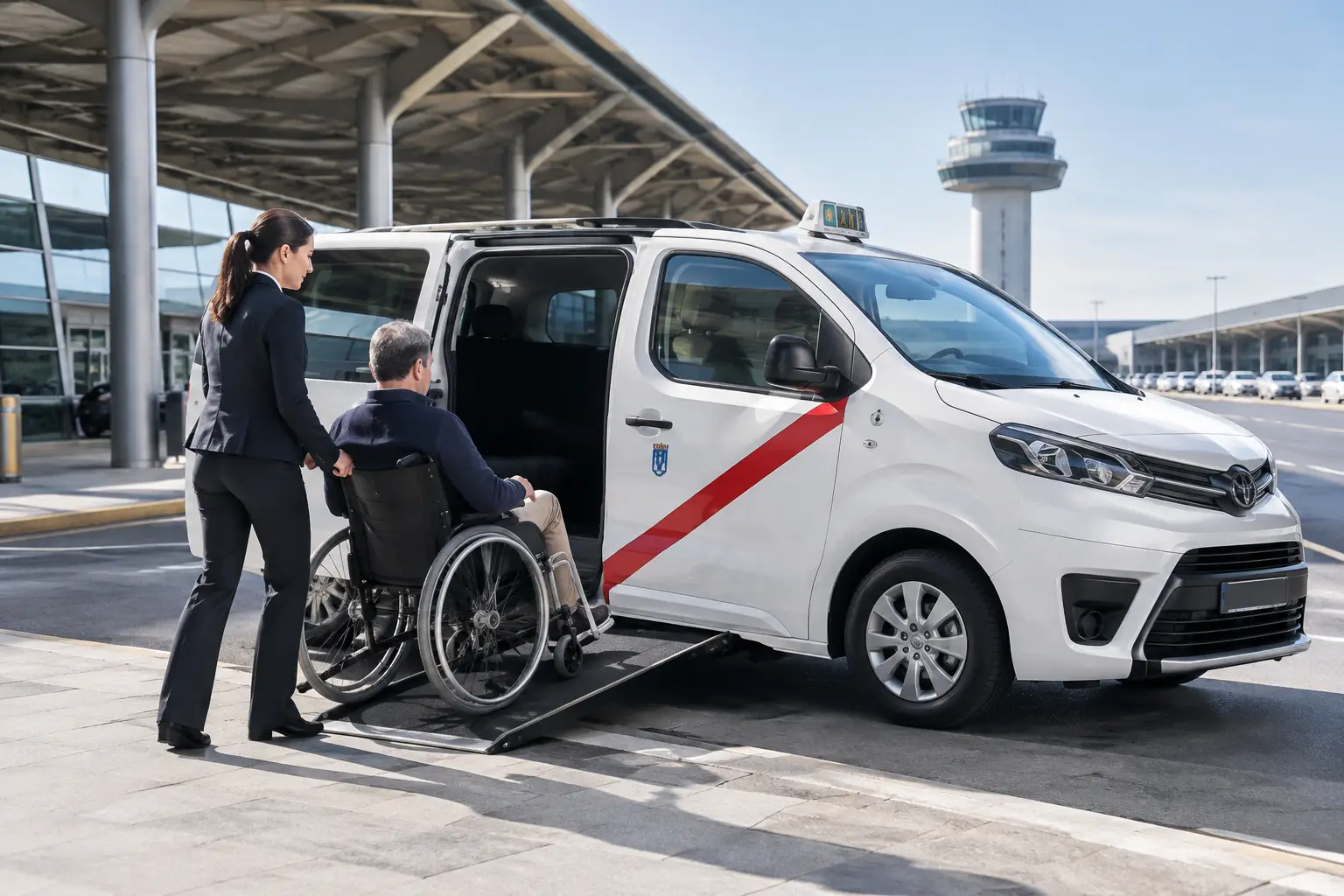
A wheelchair transfer can look straightforward on a booking form, yet the details decide whether the journey feels calm or unnecessarily difficult. Wheelchair transfer requirements are not simply about requesting an adapted vehicle. The right arrangement depends on the chair itself, whether the passenger remains seated during travel, the number of people travelling, luggage, pickup access and the level of assistance requested.
For an airport arrival, these details matter before the flight lands. A well-planned transfer means the vehicle, meeting point and loading arrangements have been considered in advance, so there is no need to negotiate space or suitability at the kerb.
Start with the wheelchair, not the route
The most useful information is a clear description of the wheelchair. Is it manual and foldable, or powered? Can it be folded or dismantled for transport? Will the passenger transfer into a vehicle seat, or travel while remaining in the chair? These are different journeys and may require different vehicle layouts.
For a powered wheelchair or mobility scooter, provide its dimensions and weight where available, including any headrest, leg supports, elevated seat or other attachments that affect its footprint. It is also helpful to say whether the battery is removable and whether there are any handling instructions. This allows the transport team to assess vehicle suitability rather than making assumptions from a general description such as “electric wheelchair”.
A foldable manual chair may be carried in some vehicles when the passenger can transfer safely into a seat, but luggage space then becomes part of the decision. A chair, several cases, a pushchair and four passengers can quickly exceed the practical capacity of a standard car. An adapted vehicle may be the better choice even when the chair itself folds.
Wheelchair transfer requirements for the passenger
The vehicle is only one part of the plan. Explain how the passenger normally transfers and what support they need at pickup and drop-off. Some travellers are fully independent once a ramp or lift is in place; others travel with a family member or carer who assists with the transfer. This should be agreed before booking, especially if the passenger cannot stand, step up, or move between a chair and seat without help.
Be precise about the assistance requested. For example, there is a practical difference between help with a suitcase, guidance from an arrivals hall to the vehicle, and assistance throughout a transfer. Stating this early helps set clear expectations for everyone involved.
If the passenger will remain in their wheelchair, the booking should also confirm the required securement arrangement and passenger restraint system. These details must suit both the individual and the chair. Do not rely on a photograph alone, although photographs can be useful alongside measurements and a written description.
Comfort deserves the same attention as access. Consider the journey length, posture needs, temperature sensitivity, pressure-relief requirements and whether a companion needs to sit nearby. For a transfer across Madrid, this may be relatively simple. For a longer route to another part of Spain, regular comfort stops, accessible facilities and suitable space for personal equipment should be discussed when requesting a tailored itinerary.
Airport pickup: plan the handover carefully
Madrid-Barajas arrivals can involve a long walk from the aircraft gate to baggage reclaim and the public arrivals area. If you require meet and greet, advise the service in advance that you are travelling with a wheelchair and whether you need help with luggage after meeting the driver. The meeting instructions should be easy to follow and should identify where the driver will wait once you have collected bags and are ready to proceed.
Flight details are particularly helpful for airport collections, as are the airline assistance arrangements you have requested separately. Airport assistance and onward road transport are connected from the passenger’s point of view, but they are not the same service. Allow enough time for disembarkation, mobility assistance, baggage reclaim and any unexpected delay before you expect to leave the terminal.
Madrid Mobility Group can arrange airport meet and greet with accessibility needs considered in advance, subject to vehicle and route confirmation. The standard airport sedan and taxi van offers should not be assumed to be wheelchair-adapted. If accessible transport is needed, request it specifically so that the right vehicle can be assessed for the chair, passenger and luggage.
For travellers who prefer to speak through the arrangements, booking by phone with Yara, MMG’s AI booking assistant, on +34 918 22 79 88 can be more comfortable than trying to fit essential mobility details into a short form.
Information to provide when booking
A complete request reduces follow-up and avoids unsuitable vehicle suggestions. Include these practical points:
- Pickup date, time and full addresses, including whether the entrance has steps, a steep ramp, limited stopping space or restricted vehicle access.
- The wheelchair type, folded and unfolded dimensions where relevant, approximate weight, and whether the passenger will stay in the chair for the journey.
- The number of passengers, companions and carers, plus every item of luggage and essential equipment.
- The assistance required at each end of the journey, including any transfer needs that should be discussed before confirmation.
- Flight number for airport pickups, or train details where appropriate, along with a contact number that will work on the day.
This is not unnecessary paperwork. It is how a transport provider distinguishes between a passenger with a lightweight folding chair and a passenger travelling in a powered chair with medical equipment, two companions and large suitcases. Both deserve a comfortable arrangement, but they may not need the same vehicle.
Think beyond the vehicle door
Accessible travel can be affected by the pickup and drop-off points as much as by the journey itself. A hotel may have a level entrance but limited space for a ramp deployment. A private home may be on a narrow street where a larger vehicle needs a sensible stopping plan. Conference venues, wedding locations and rural accommodation can present similar questions.
Tell the transport team about barriers you already know of, including steps, difficult pavements, low underground parking entrances or a building entrance that is not visible from the road. If you are travelling to a new address, ask the hotel, venue or host about the most practical collection point. A small adjustment to the meeting location can make arrival much easier.
For group travel, do not assume one accessible vehicle solves every need. The number of wheelchair users, companions, luggage and seating preferences all affect the arrangement. A larger group travelling from Madrid to Toledo, Segovia or another nearby destination may need a tailored transport plan, particularly where equipment must remain with the passenger throughout the day.
When a transfer involves children or medical equipment
Families should mention children’s ages, required child restraints and whether a child uses a wheelchair or specialist seating. These requirements need to be confirmed in advance; they should never be left to a last-minute assumption at pickup.
If the passenger travels with oxygen, communication equipment, medication, hoists, cushions or other essential items, explain what must remain accessible during the journey and what can be stowed. The transport arrangement is not a substitute for medical advice or clinical support, but clear information helps ensure that necessary equipment has appropriate space and is not packed beyond reach.
It can also be sensible to carry key contact details and any relevant handling instructions with the travelling companion or passenger. This is especially useful on multi-day trips, when different hotels and collection points are involved.
Confirm the details in writing
Before travel, check that the confirmation reflects the essentials: the date and pickup point, passenger count, wheelchair information, luggage, agreed assistance and any accessibility features requested. If plans change - for example, a different chair is being used, an extra relative is travelling, or additional bags are added - advise the provider as soon as possible. A change that appears minor can alter the vehicle requirement.
Accessible transport works best when nobody has to guess at the kerbside. Share the real details, ask direct questions and give the arrangement time to be confirmed properly. That preparation leaves more room for the part that matters: arriving comfortably and getting on with your plans.