
Accessible Travel Comfort Features That Matter
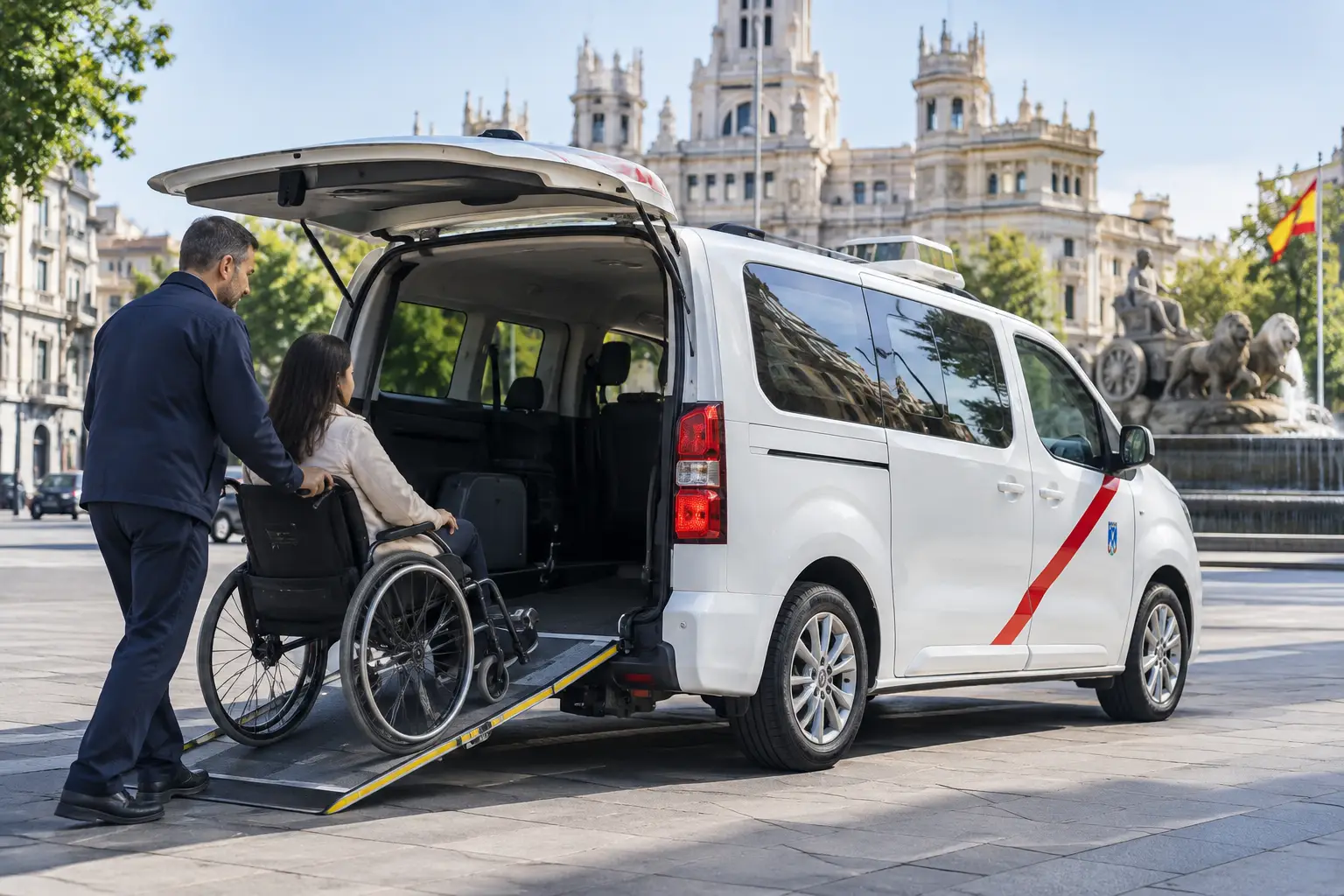
A journey can become difficult long before the vehicle arrives. A vague reply about wheelchair space, an unclear meeting point or a transfer planned without enough room for family members and luggage can turn a straightforward trip into an anxious one. The right accessible travel comfort features make travel more manageable because they are planned around the person, the route and the practical details that matter on the day.
For travellers with reduced mobility, older passengers, wheelchair users and families travelling with additional equipment, comfort is not an optional extra. It is the ability to enter and leave the vehicle safely, sit with appropriate space, understand what will happen next and arrive without unnecessary strain. This applies equally to a hotel journey in Madrid, a private day trip, or a longer road journey to destinations such as Seville, Málaga, Granada or Santander.
Accessibility starts before the journey
An accessible journey is arranged, not assumed. A vehicle described simply as spacious may still be unsuitable if it does not meet a passenger's specific mobility requirements. Equally, a suitable vehicle can be less helpful if the driver has not been given clear information about the collection point, mobility equipment, assistance needs or the time needed to board.
The most useful booking conversation covers the essentials in plain language. Is the passenger travelling in a manual or powered wheelchair? Can they transfer to a vehicle seat, or do they need to remain in the wheelchair? Is there a folding wheelchair, walking frame, oxygen equipment or other essential item to accommodate? How many people are travelling, and how much luggage is coming too?
These questions are not a barrier to booking. They allow the transport provider to assess whether an adapted vehicle can be arranged and whether the journey plan needs additional time. Vehicle suitability depends on the equipment, passenger numbers, luggage, route and availability, so it is better to confirm each requirement in advance than rely on a broad accessibility label.
The accessible travel comfort features worth confirming
Comfort has many parts, and their importance changes from one traveller to another. For a visitor recovering from surgery, an easy step-in height and a shorter walk from the hotel entrance may be central. For a wheelchair user, secure accommodation for the chair and enough internal space may be decisive. For a family travelling with an older relative, it may be the reassurance of door-to-door collection and a calm, unhurried arrival.
Safe boarding and enough time to settle
Rushing is one of the least comfortable parts of travel. A considerate plan allows time for boarding, positioning mobility aids and ensuring passengers are settled before departure. It also means selecting practical collection and drop-off points where possible, rather than asking someone to navigate a distant rank, busy pavement or unfamiliar transport interchange.
For larger hotels, conference venues and stations, the exact meeting instructions should be agreed in advance. Clear instructions reduce standing time and prevent the stress of searching for a vehicle in a crowded area.
Space for people, equipment and luggage
A vehicle must work for the whole party, not only the passenger count. Six passengers with several large suitcases need a different arrangement from six passengers travelling lightly. Add a wheelchair, pushchair, medical equipment or mobility aids and the vehicle requirements change again.
Modern, well-maintained passenger vans, larger vehicles, minibuses or other suitable transport can be considered according to the group and route. The key is to provide accurate information at enquiry stage. It is better to say that there are three large cases, two cabin bags and a folding wheelchair than to estimate that there is ‘a bit of luggage’.
A comfortable cabin for longer road journeys
For travel beyond Madrid, cabin comfort becomes more significant with every kilometre. Climate control, clean seating, sensible luggage placement and the ability to plan appropriate stops can make a meaningful difference on a journey across Spain.
Long-distance travel should not be treated like a short city transfer with a longer driving time. Passengers may need planned comfort breaks, time for medication, accessible toilet stops or simply an opportunity to stretch. The right schedule depends on the passenger's needs, traffic conditions and the route, but discussing it in advance gives the journey a more realistic pace.
Clear communication without assumptions
Accessibility also includes being understood. Travellers should be able to explain their requirements without having to repeat themselves at every stage. A written confirmation that records the key details — collection time, addresses, passenger numbers, mobility equipment and any agreed assistance — provides a useful reference for everyone.
For international visitors, clear communication in English can remove considerable friction. Arabic, English and Mandarin translator accompaniment may also be available by prior request, subject to availability, where it is relevant to a wider itinerary, appointment or event. This should be arranged early, particularly when the journey involves several stops or coordination with hotels, restaurants or property viewings.
Plan the route around the passenger, not just the map
The quickest route is not necessarily the most comfortable one. Busy city centres, restrictive access points, steep approaches and large transport hubs can make an otherwise short transfer tiring. A well-planned service considers where a passenger needs to be collected, where the vehicle can stop safely and how far they will need to travel on foot or by wheelchair at either end.
This is particularly helpful for multi-stop days. A visitor may need to leave a Madrid hotel, attend a business meeting, visit a property, stop for lunch and continue to another city. When mobility needs are involved, each stop should be reviewed for practical access and timing rather than added to an itinerary as an afterthought.
For private day trips or multi-day itineraries, accommodation and activity timings deserve the same attention. A historic destination may involve cobbled streets, hills or vehicle restrictions near central landmarks. Road transport can still provide a comfortable way to travel between locations, but it cannot remove every physical challenge at the destination. Honest planning helps travellers choose a pace and programme that suit them.
Why direct coordination makes a difference
Accessibility arrangements can be lost when a booking passes through several platforms, drivers or intermediaries. Direct communication gives travellers a clearer opportunity to describe their needs and ask practical questions before committing to the journey.
Madrid Mobility Group can assess requests for private transfers, group transport, longer intercity journeys and tailored itineraries according to confirmed passenger requirements. The pricing basis depends on the service booked. For licensed taxi journeys, confirm the applicable regulated fare; for other private transport services, request a quotation based on the vehicle, route, schedule, stops and service needs. Booking ahead does not by itself determine the pricing model. Confirm the inclusions, waiting arrangements and any potential additional charges before accepting the booking.
It is sensible to share accessibility requirements as early as possible, especially for travel during major events, school holidays or journeys requiring an adapted solution. Early notice gives more scope to consider the appropriate vehicle and timings. It also leaves time to clarify the details that can affect comfort, such as luggage volume, companion travel, a preferred break schedule or the need for collection close to an entrance.
A better question than “Is it accessible?”
The question ‘Is it accessible?’ is a useful starting point, but it is too broad to produce a reliable answer on its own. A more helpful question is: ‘Will this journey work comfortably and safely for this passenger, with this equipment, on this route?’
That shift keeps the focus on real travel conditions. It recognises that accessibility is personal, that journeys vary and that comfort comes from thoughtful coordination rather than a standard promise. Before booking, share the practical details, ask for confirmation of what can be provided, and allow enough time for the journey to be arranged properly.