
Cómo solicitar vehículo adaptado en Madrid
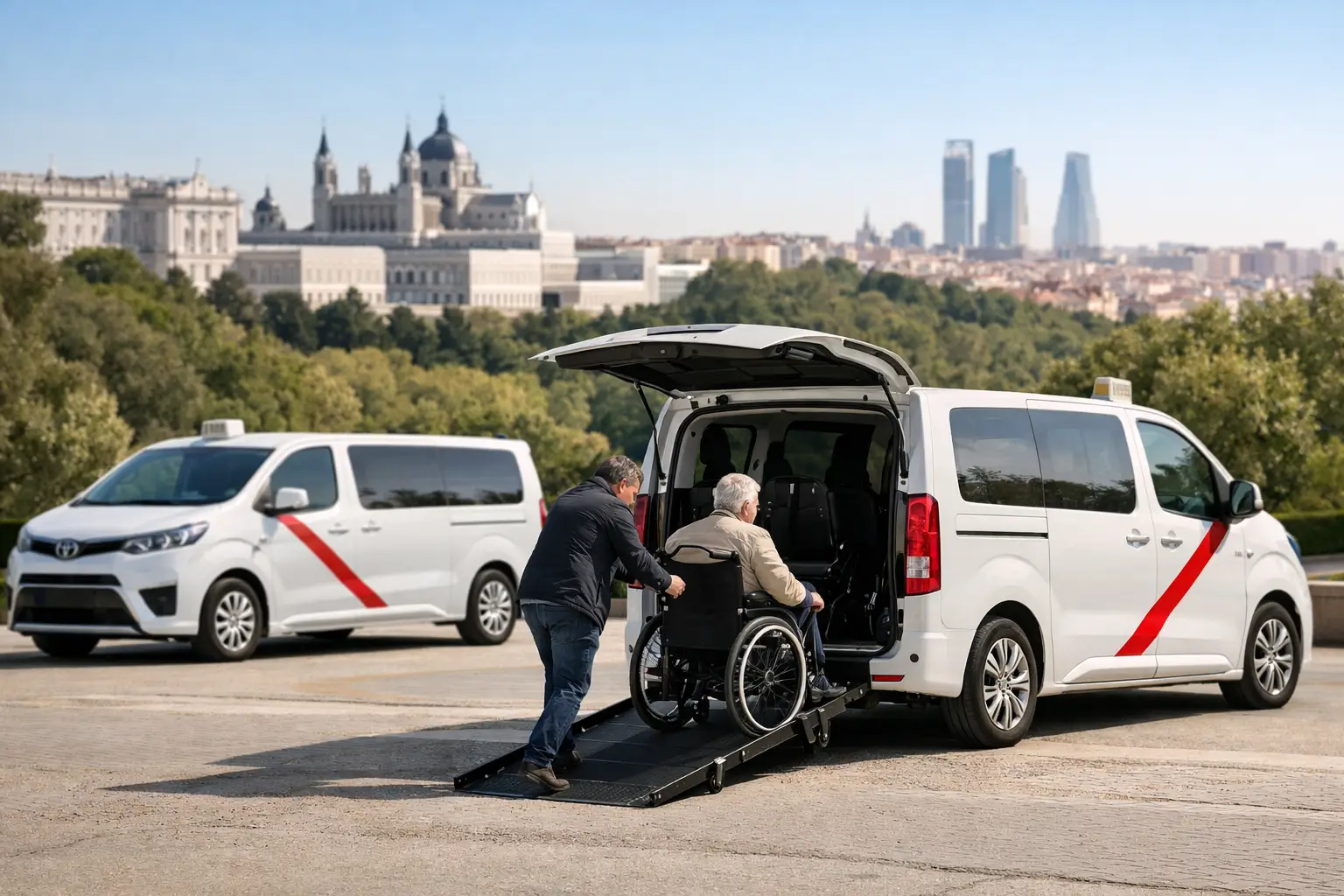
A journey can become difficult long before the vehicle arrives if accessibility is treated as an afterthought. If you are searching for how to request an adapted vehicle, the most useful answer is simple: book directly, describe the passenger’s real requirements clearly, and receive confirmation that the vehicle and driver are suitable for the journey.
For an airport collection, a hotel transfer, an appointment, a family visit or a day trip beyond Madrid, a genuinely adapted vehicle should provide more than a ramp. It should offer safe wheelchair access, enough room for passengers and luggage, a calm boarding process, and a driver who understands that time and dignity both matter.
Start with the journey, not just the vehicle
When requesting adapted transport, explain where the journey starts and ends, the date and preferred collection time, and whether it is a one-way or return booking. These basics allow the operator to plan the route, collection point and vehicle schedule properly.
Then describe the passenger’s mobility needs. A wheelchair user may travel while remaining in their chair, transfer to a seat, or use a folding wheelchair after boarding. These situations require different space, securing and loading arrangements. Stating this at the beginning avoids the uncomfortable and avoidable surprise of a vehicle that is technically accessible but unsuitable for the specific passenger.
Airport journeys deserve particular care. Provide the flight number, arrival terminal and any expected assistance time. International arrivals can be delayed by passport control, baggage reclaim or airport support services. A professional pre-booked collection should account for this and agree a clear meeting process, so the passenger is not left trying to find accessible transport after a long flight.
For collections from hotels, clinics, event venues or private addresses, mention the entrance most suitable for wheelchair access. Some buildings have a side entrance, a quieter drop-off point, steps at the main door, or restricted vehicle access. A little detail in advance makes the handover more refined and much less rushed.
How to request an adapted vehicle with the right details
A fast booking message is welcome, but it needs enough information for the provider to confirm the service responsibly. When contacting an operator by WhatsApp or enquiry form, include the following details:
- Collection date, time, full address and destination.
- Number of passengers, including companions and children.
- Whether the passenger will remain in the wheelchair during travel or transfer to a vehicle seat.
- Wheelchair type, plus its approximate width, length and weight if known.
- Whether it is manual, powered, folding or a mobility scooter.
- Number and size of suitcases, particularly for airport transfers.
- Any assistance needs at collection or destination, such as a ramped entrance or additional boarding time.
You do not need to use technical language. A clear photograph of the wheelchair can also help when dimensions are uncertain, especially for powered chairs or chairs with headrests, reclining backs or extra equipment. The aim is not to make the passenger justify their needs. It is to ensure the right adapted taxi van is allocated from the outset.
If you are booking on behalf of a relative, guest, employee or client, ask the passenger what makes boarding comfortable and secure. Some people value a few extra minutes at collection; others need the driver to wait at a visible point rather than call from outside. These details are small, but they often define whether the journey feels managed or stressful.
Check that “adapted” means suitable
Not every vehicle described as accessible will meet every traveller’s needs. Before confirming, ask whether the wheelchair can travel securely in the passenger compartment and whether the vehicle has approved restraints for the chair and passenger. The ramp or lift capacity must also be appropriate for the wheelchair and its occupant.
It is sensible to confirm how many accompanying passengers can travel once the wheelchair is aboard. Modern taxi vans may accommodate up to six passengers in standard arrangements, but wheelchair space and luggage will affect the final capacity. A family of five with a large powered wheelchair and several suitcases may need a different arrangement from two travellers with a folding chair.
Also ask about luggage space. A wheelchair transfer to or from the airport often involves more than one suitcase, hand luggage, medical equipment or a pushchair. There is no benefit in booking a comfortable accessible vehicle if the bags must be placed awkwardly around the passenger area.
Driver experience matters just as much as vehicle equipment. The driver should know how to position the vehicle safely, deploy the access system, secure the wheelchair correctly and allow the passenger time to board without pressure. Professional service is discreet: the driver provides practical support, confirms that the passenger is comfortable, and does not turn assistance into a public spectacle.
Choose the collection time with care
Accessible travel can take a little longer at both ends of the journey. That is not a problem when it is planned for. For flights, appointments, theatre performances, weddings and cruise connections, build in enough time for boarding, traffic and any required airport or venue assistance.
For an early flight from Madrid, it is usually better to arrange a door-to-door collection with a clear time than rely on finding an adapted vehicle at short notice. The same applies after an evening event, when public transport may be crowded and suitable vehicles are less readily available.
If the trip includes several stops, state them before booking. Perhaps you need collection from a hotel, a stop at a restaurant, then transport to a station. Or perhaps you are travelling to Toledo, Segovia or another destination and want to plan accessible pauses along the way. A pre-arranged itinerary gives the operator the opportunity to quote and schedule accurately, rather than improvising during the journey.
Understand the price before you travel
Price clarity is part of accessible service. For standard official taxi journeys within Madrid, regulated metered pricing may apply. For airport transfers, long-distance travel, waiting time, day trips, event transport or multi-stop arrangements, confirm whether the price is metered, fixed or agreed in advance.
An agreed price is often particularly helpful where accessibility needs require extra coordination, a longer waiting period, or a return collection at a specific time. Ask what is included: collection, luggage, waiting time, tolls where relevant, return travel and any planned stops. The question is not only “what does it cost?” but “what service is covered by that price?”
Be cautious about choosing solely on the lowest figure. A cheaper journey is poor value if the vehicle cannot safely accommodate the wheelchair, the driver has not been briefed, or the passenger is left waiting after landing. Transparent pricing and confirmed suitability are more useful measures of value.
Make communication easy for every traveller
A direct point of contact is especially valuable when plans change. Flights move, hospital appointments overrun, and family members may need to adjust a collection time. Keep the operator’s booking contact available and notify them as early as possible if your circumstances change.
For visitors who do not speak Spanish confidently, multilingual support can remove another layer of travel pressure. Madrid Mobility Group can coordinate transport in English, Arabic and Mandarin, with translator accompaniment available for selected travel, hospitality and private arrangements. This can be useful not only for the journey itself, but also for hotel coordination, property viewings, events and appointments where clear communication is essential.
When travelling with a personal carer, companion or assistance animal, mention this while booking. It helps ensure the vehicle layout, passenger capacity and collection process are appropriate. The best arrangements are specific without being intrusive: the operator needs the practical facts, while the passenger remains in control of how much personal information they share.
Confirm the booking in writing
Before the day of travel, request written confirmation of the key details: date, collection time, addresses, passenger count, wheelchair arrangement, fare basis and contact process. If your journey is time-sensitive, confirm the expected collection point and what to do if you cannot immediately see the driver.
For a return trip, check whether the driver will wait, return at an agreed time, or collect you after a message or call. This is particularly useful at large venues, airports and historic city centres, where road access can be limited and the closest practical meeting point may not be the main entrance.
A well-planned adapted transfer should feel unremarkable in the best sense. You should be able to focus on your flight, meeting, family occasion or day out, knowing the vehicle has been selected for your needs and the person collecting you is prepared.
When you request an adapted vehicle, clarity is not an extra step. It is what turns a booking into dependable, door-to-door travel with the comfort, space and respect every passenger deserves.