
Madrid Taxi Meter Rates for Every Journey
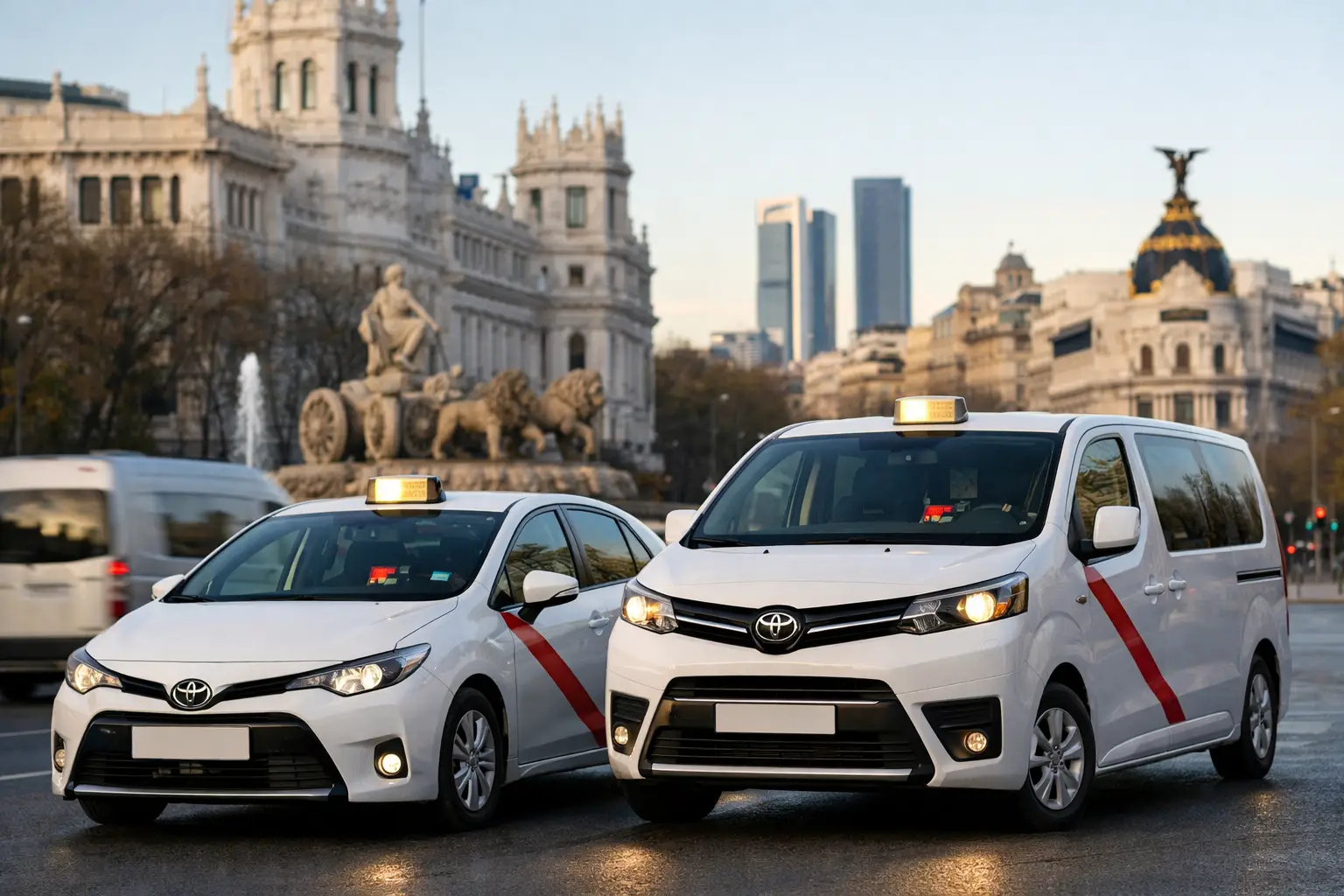
A taxi journey in Madrid should not begin with a guess about the price. Madrid taxi meter rates are regulated, displayed in the vehicle and designed to calculate a fare transparently from the moment your journey starts. For visitors arriving after a long flight, families travelling with luggage or business guests moving between meetings, knowing how the meter works removes one more uncertainty from the day.
Madrid’s official taxis use authorised tariffs rather than privately negotiated prices for standard city journeys. The precise amount depends on the tariff in force, the distance travelled, the time and day of travel, waiting time and any applicable supplement. A professional driver should be able to explain the fare clearly, provide a receipt and ensure the meter is visible throughout the trip.
How Madrid taxi meter rates are calculated
A metered fare is built from several regulated elements. First, the meter applies the correct starting charge for the active tariff. It then adds an amount for distance and, when the vehicle is moving slowly or stopped in traffic, an amount for time. This matters in a city where the quickest route on a map is not always the quickest journey at street level.
The tariff displayed at the start of your trip may differ between daytime, evening, overnight, weekends and public holidays. These distinctions are set by the local authorities and can be updated, so it is sensible to check the tariff card displayed inside the taxi when you travel. The card sets out the current fares, the conditions for each tariff and the supplements that may apply.
For most journeys, there is no need to calculate every kilometre yourself. The practical point is that the meter should begin at the authorised amount, remain visible and reflect the journey rather than an informal price agreed at the kerb. If you would like an estimate before setting off, ask your driver. A reliable operator will explain what can be estimated and what remains dependent on traffic or waiting time.
Distance, time and traffic
Meters do not only measure kilometres. When traffic is flowing, the distance element generally does most of the work. In heavy traffic, at lengthy traffic lights or during a slow hotel pick-up, the time element becomes more significant.
That is why two journeys between the same addresses can cost different amounts. A late-evening run across a quiet city may be quicker and lower than the same route during a busy weekday, even if the driver covers a similar distance. It is also why a fair comparison should consider the service provided: luggage assistance, vehicle space, accessibility requirements, waiting arrangements and the certainty of an official, insured journey all have practical value.
Madrid taxi meter rates and airport journeys
Airport travel is where fare questions arise most often. Madrid-Barajas Airport has specific regulated arrangements, and a fixed airport fare may apply for journeys to certain areas of the city rather than the ordinary metered calculation. Other airport journeys may use the meter with the relevant authorised supplement.
The applicable method depends on your destination and the tariff rules in force on the day. Before leaving the airport, confirm whether your journey is on a fixed fare or metered tariff, and ask whether any airport charge is already included. This is particularly useful if you are travelling beyond the central area, staying outside the city or continuing to another destination in Spain.
For pre-arranged airport collection, it also helps to distinguish between the taxi fare and any additional service requested. A straightforward official taxi trip follows the regulated fare structure. A meet-and-greet inside the terminal, extra waiting after a delayed arrival, a larger adapted vehicle, a bilingual assistant or a multi-stop itinerary may need to be arranged separately. Clear confirmation in advance prevents unwelcome surprises at the end of the journey.
Supplements are not arbitrary extras
Supplements can sound concerning when you are unfamiliar with a city, but in Madrid they are regulated and listed on the official tariff information in the vehicle. Depending on the current rules, they may relate to airport trips or other defined circumstances. They are not a reason for a driver to add an unexplained amount to a fare.
Ask a simple question before departure: “Which tariff applies, and are there any supplements for this journey?” A professional driver will answer directly. Keep your receipt until the journey is complete, especially if you are travelling for work or need to reclaim expenses.
What should be included in a normal taxi fare?
A normal metered taxi fare covers the journey in an official taxi under the active regulated tariff. The driver should use the meter, follow a sensible route and offer a receipt showing the fare. Payment methods can vary by vehicle, so if you need to pay by card, it is wise to confirm this when booking or before entering the taxi.
Luggage is a common concern for airport passengers and families. In a suitable vehicle, ordinary luggage handling should be straightforward, but capacity is not unlimited. A saloon taxi can be impractical for several large cases, a pushchair or equipment for a group. Booking the right vehicle is often more useful than trying to make an unsuitable car work at the rank.
For groups of up to six passengers, modern taxi vans offer more room for people and bags while retaining the reassurance of an official taxi service. Travellers using a wheelchair should request a genuinely adapted vehicle in advance, rather than assume that any larger taxi will meet their access needs. Safe access, secure restraint and a trained driver are part of the journey, not optional details.
When a fixed price makes more sense than a meter
Metered pricing is ideal for direct, standard journeys within Madrid because it is regulated and easy to understand. It is not always the best format for every plan. A day trip with several stops, an event itinerary, a hotel concierge request, a real-estate viewing programme or a journey to Toledo, Segovia or another destination beyond the city is usually better arranged at an agreed price.
The trade-off is straightforward. A meter works well when the route and timing are simple. An agreed price is often clearer when the day includes waiting, return travel, multiple addresses, luggage changes or flexible timings. It allows the service to be planned around your group rather than leaving every variable to be calculated during the journey.
At Madrid Mobility Group, standard local taxi journeys follow regulated metered pricing, while day trips and tailored transport can be confirmed with an agreed price before travel. This approach is particularly helpful for international visitors who want direct communication in English, Arabic or Mandarin, as well as for guests who need discreet coordination with hotels, restaurants or event venues.
How to travel with confidence
Before a routine taxi journey, share your destination clearly and check that the meter is running on the correct tariff. If you are arriving at the airport, ask whether the fixed fare or the meter applies. If you have a large group, several cases, reduced mobility requirements or an itinerary that goes beyond one direct trip, arrange the suitable vehicle and pricing structure in advance.
A transparent taxi fare is not just about the final number on the receipt. It is about knowing that the vehicle is licensed, the driver understands the plan, the space suits your party and the price is being calculated in the right way. With the right arrangements made before you set off, you can leave the traffic, timings and practical details to your driver and focus on the reason you came to Madrid.