
How to Choose Executive Transport with Confidence
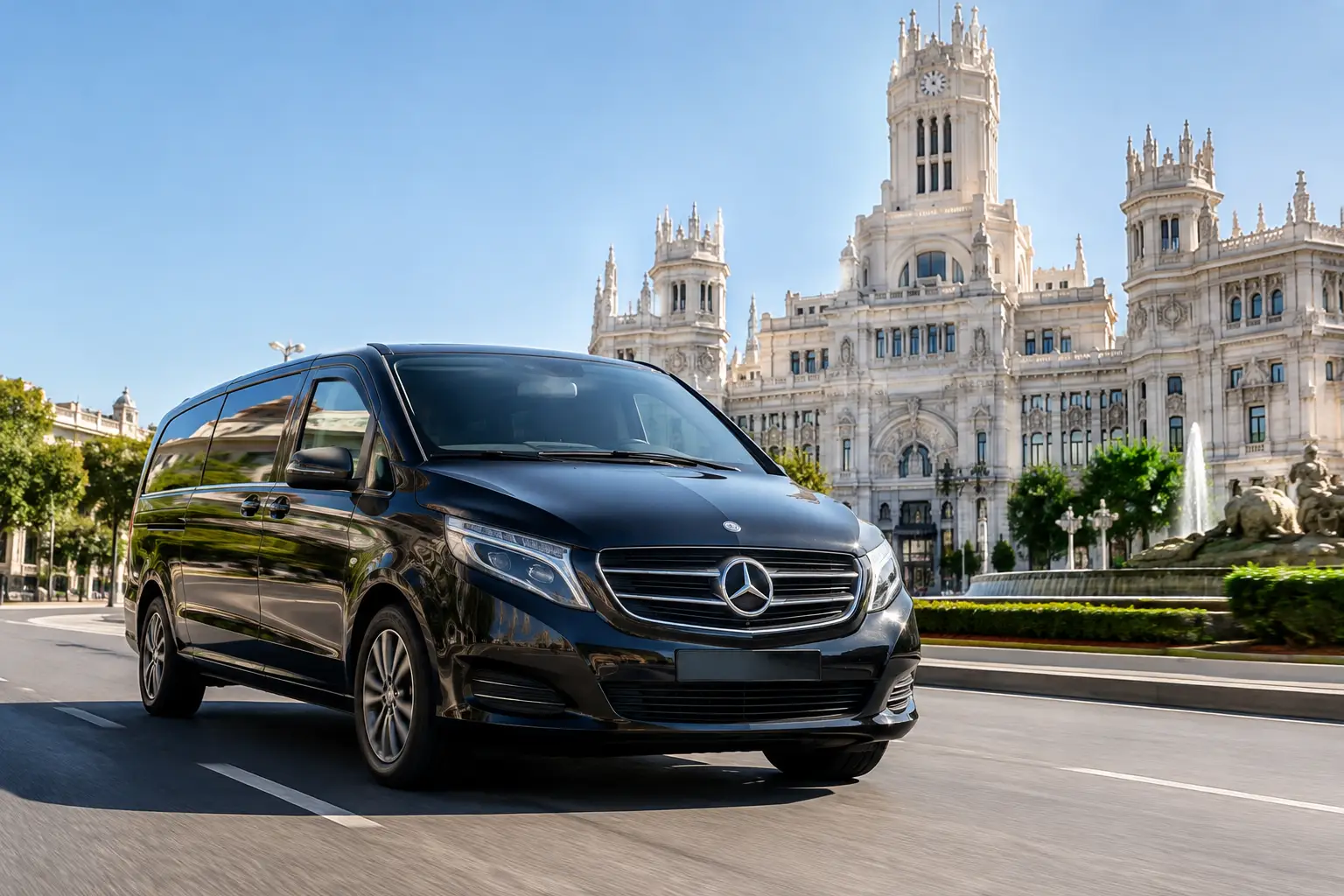
A late arrival into Madrid, a board meeting across town and an onward journey to another city can look straightforward on an itinerary. The practical difficulty is making each handover feel calm rather than rushed. When you choose executive transport, you are not simply selecting a car: you are agreeing the vehicle, pickup plan, waiting arrangements, luggage space and level of support around a particular journey.
For a single airport transfer, the brief may be simple. For a visiting leadership team, a roadshow, a client dinner or a multi-day route across Spain, the details carry more weight. The right booking gives every traveller clear expectations before they set off.
Choose executive transport around the journey, not the label
“Executive” can mean different things depending on the occasion. A business traveller heading from Madrid-Barajas Airport to a central hotel may need a discreet executive saloon and a driver who knows the confirmed flight and meeting schedule. A team travelling with presentation cases and several suitcases may be better served by a passenger van, even if there are only a few people travelling.
Start with the purpose of the journey. Is privacy needed to prepare for a meeting? Will passengers need to make calls? Is the route a one-way airport arrival, an afternoon of appointments, or a longer intercity transfer? A vehicle that works well for a short city journey may not be the most comfortable choice for a full day on the road.
It also helps to decide whether the plan needs to allow for several stops. An executive chauffeur arrangement can suit a programme with meetings in different locations, while a point-to-point private transfer is often the clearer choice when the departure and destination are fixed. Neither is automatically better. The useful option is the one that reflects the real itinerary and sets out what is included.
Give the booking team the full passenger picture
Passenger count alone does not determine the vehicle. Luggage is frequently the detail that changes the recommendation, particularly after an international flight or before a longer journey. Mention cabin bags, larger cases, equipment, golf bags, garment bags, samples or mobility aids at the enquiry stage.
Group composition matters too. Senior guests may appreciate extra room and a quieter cabin. Families might require confirmed child restraint arrangements. Passengers with reduced mobility may need a suitable adapted vehicle and assistance planned at both ends of the journey. These arrangements should be discussed in advance, as not every vehicle is configured for wheelchair travel.
For larger delegations, passenger vans, Mercedes-Benz Sprinters, minibuses or buses can be considered according to group size, luggage and route. Keeping a group together can simplify timing and communication, but splitting passengers between vehicles may sometimes be more practical where arrival times, destinations or comfort requirements differ.
What a clear executive transport quote should cover
Executive travel should not leave room for assumptions. Ask for a written outline of the service, including the pickup and destination, date, local times, vehicle category and passenger numbers. For airport collections, share the flight details so the meeting process can be planned around the scheduled arrival.
The quote should make clear whether it is for a direct transfer, hourly chauffeur availability, a half-day or full-day programme, or a multi-day itinerary. It should also explain any agreed waiting allowance, planned stops, parking or toll considerations where relevant, and the process if timings change. This is particularly valuable when travel is being booked by an assistant, hotel concierge or corporate travel manager on behalf of others.
Pricing depends on the service booked. A licensed Madrid taxi uses the applicable regulated fare structure, while executive private transport, chauffeur services, vans, minibuses and longer-distance itineraries are normally quoted for the agreed journey or schedule. Comparing two figures without comparing the service basis can lead to the wrong decision. A lower price may not include the same vehicle type, waiting provision, route planning or booking support.
Payment method and invoicing requirements should be agreed before travel, especially for company bookings. If a cost centre, purchase order or traveller reference is needed, provide it during the booking process rather than trying to add it after the journey.
Timing matters more on longer routes
Madrid is well placed for private road travel to nearby destinations such as Toledo, Segovia, Avila and Valladolid, where the journey can be shaped around a meeting, hotel check-in or a planned visit. Longer routes to Valencia, Alicante, Malaga, Marbella, Seville, Cadiz, Cordoba, Granada, Bilbao, San Sebastian, Santander, Asturias, Galicia or La Rioja require a different level of planning.
These are not casual day trips to squeeze between appointments. Depending on the destination and the purpose of travel, an overnight stay, a multi-day itinerary or a combination of private road transport and rail or air travel may be more sensible. A professional transport coordinator should be willing to discuss those trade-offs rather than forcing every request into a single format.
For a multi-city programme, share the complete outline: addresses where available, preferred departure windows, hotel details, meeting end times, passenger changes and any days when the vehicle is not required. A full picture makes it easier to match the right vehicle and driver arrangement to the route, while allowing availability to be confirmed properly.
Plan airport and event collections with realistic buffers
Airport arrivals can be unpredictable even when the flight operates to schedule. Luggage delivery, passport control and the time needed to reach the meeting point all affect the collection. Providing a reachable passenger telephone number and clear flight details helps reduce confusion without requiring travellers to manage logistics while they are tired or in a hurry.
For conferences, dinners and corporate events, confirm the exact pickup point rather than relying on a venue name alone. Large hotels, exhibition sites and event spaces may have several entrances or designated vehicle access points. If passengers are leaving at different times, specify this beforehand so the transport plan can reflect it.
Communication should suit the people travelling
The best executive transport arrangements are quietly well organised. Passengers should know who is collecting them, where they should go and what to do if their plans move. The booker should know the agreed schedule, contact process and any conditions attached to changes or waiting.
For international visitors, English- or Arabic-speaking drivers can be requested in advance, subject to availability. Where more detailed language support is needed, translator accompaniment, including Mandarin, may also be requested. These are different services, so it is worth being specific about whether the passenger needs basic journey communication or a translator for appointments and visits.
Discretion also means handling personal information carefully. Only share the contact details, flight information and addresses needed to organise the service. For high-profile guests or confidential meetings, tell the booking team about any agreed arrival protocol, but avoid placing sensitive itineraries in broad group messages.
Questions worth asking before you confirm
Before booking, ask whether the proposed vehicle suits the number of passengers and their luggage, whether the quote covers the exact itinerary, and how waiting or changes will be handled. Confirm pickup instructions, lead passenger contact details and payment arrangements. If accessibility, child seats, language support or additional assistance is required, ask for written confirmation that the requested arrangement can be provided.
For recurring executive journeys, consistency is useful, but each booking still benefits from a quick review. A familiar airport route can become more complex when a colleague joins, luggage increases or the destination changes from a city centre office to a site outside Madrid.
Madrid Mobility Group can coordinate executive saloons, licensed taxis, passenger vans, Sprinters, minibuses, buses and suitable adapted transport for private journeys from and to Madrid and across Spain, subject to the requested configuration and availability. An early, detailed enquiry gives the team the information needed to propose the most appropriate arrangement.
The right choice feels unremarkable to the passenger because the practical work has been settled beforehand. Share the journey as it will actually happen, ask for the details that matter to your group, and let the transport plan support the day rather than compete with it.