
Guía para traslados entre ciudades desde Madrid
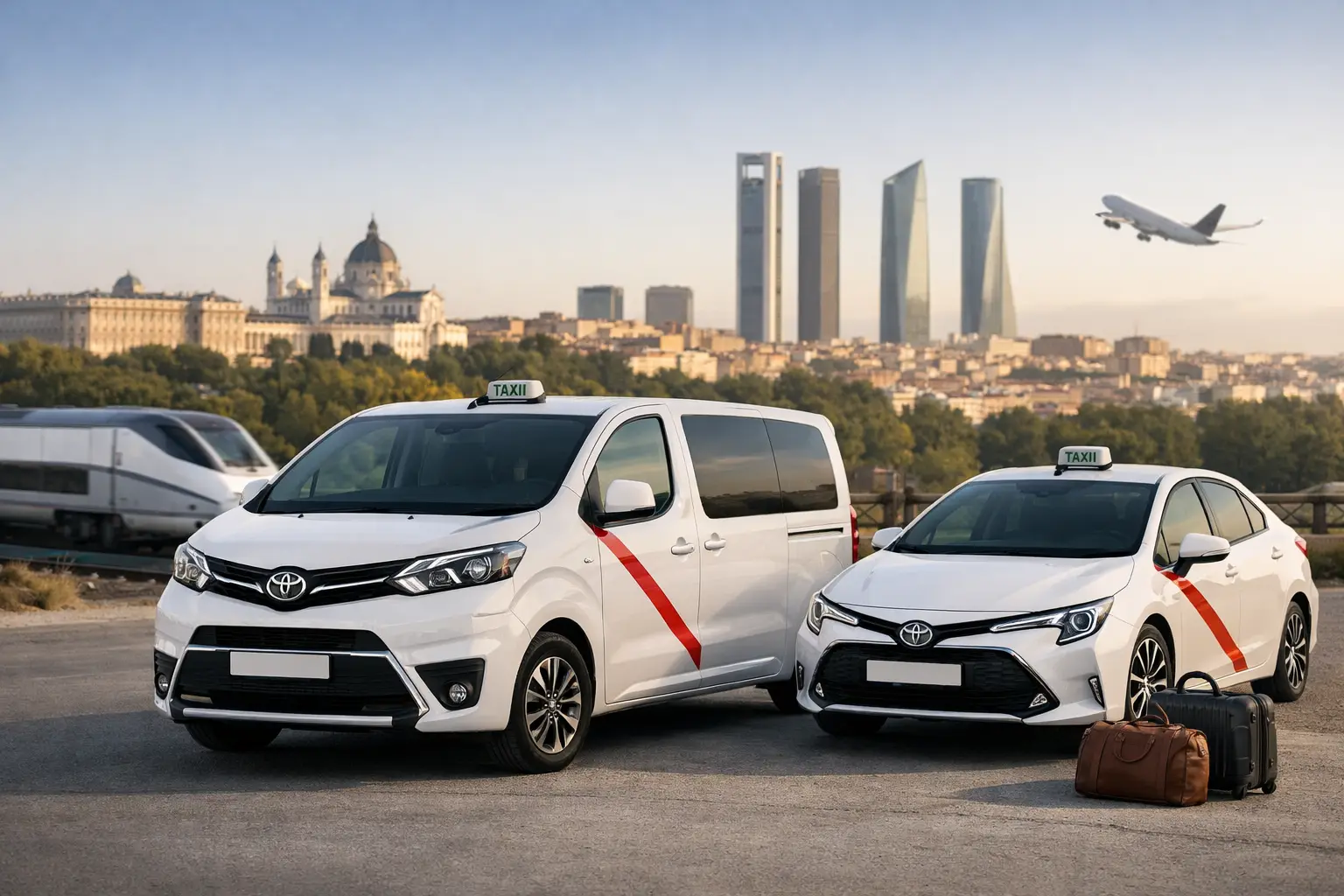
A good guía para traslados entre ciudades begins before the vehicle arrives. The difference between an easy journey and a stressful one is rarely the road itself. It is whether the pickup point is clear, the vehicle suits your group and luggage, the price is understood, and the driver can adapt when a flight, meeting or hotel check-in changes.
For travel from Madrid to destinations across central Spain - or onward to any point in the country - private transport gives families, business travellers and small groups one clear plan from door to door. The key is choosing the right service for the journey, rather than treating every intercity transfer as a simple taxi ride.
Start with the journey, not the vehicle
Before requesting a quote, define the practical shape of the trip. Are you travelling directly from an airport terminal to a hotel in another city? Do you need a return journey after a business meeting? Is the transfer part of a day trip with several stops, restaurant timings and a fixed return time?
These details affect the most suitable arrangement. A direct Madrid-to-Toledo transfer is different from a full day visiting Toledo and Segovia, just as an airport collection for two passengers is different from moving a family of six with pushchairs and several large cases. Clear information allows the operator to schedule properly, assign an appropriate vehicle and provide a realistic price from the outset.
For a first enquiry, share the date, pickup time, collection address, destination, passenger count, luggage, and any mobility requirements. If your itinerary includes a train, flight, cruise connection, event or restaurant reservation, include those timings too. A professional transfer service should be able to tell you what is feasible without making promises that leave no allowance for traffic, terminal walking distances or road conditions.
Choose the right type of intercity transfer
A standard city taxi journey and a private intercity service may be priced differently. Within Madrid, official taxis generally operate under regulated metered pricing. For longer trips, day excursions and bespoke itineraries, an agreed price is often more useful because it makes the cost clear before travel begins.
That clarity matters most when the journey has variables. Waiting time, additional stops, a late-evening return or a multi-day route should be discussed in advance. The lowest initial figure is not always the most economical choice if it excludes the time, coordination or vehicle capacity your group actually needs.
Direct transfer
A direct transfer suits travellers who want to leave one address and arrive at another without changes, station queues or the need to manage luggage across platforms. It is particularly practical after a flight, when children are travelling, or when the destination is outside a city centre.
For business travellers, it also creates useful working time. A quiet, climate-controlled vehicle can be a more practical setting for preparing for a meeting, taking a call or simply arriving composed than a sequence of public transport connections.
Return transfer or waiting service
If you are attending a wedding, conference, property viewing or private event, a return arrangement can remove the uncertainty of finding transport at the end of the day. However, it is worth deciding whether you need the driver to wait or whether a later collection is more appropriate.
Waiting works well when timings are likely to move or when the location has limited local transport. A scheduled return is often better for a clearly timed meeting or meal. Neither option is universally better - it depends on how fixed your plans are and whether you value flexibility over a lower overall cost.
Private day trip
A day trip is not simply a transfer with sightseeing added. It needs a realistic route, sensible time at each stop and a return plan that does not turn the final hour into a rush. Destinations such as Toledo, Segovia, Valladolid and Peñafiel reward unhurried planning, especially when meals, guided visits or accessibility needs are involved.
Ask for the itinerary to be agreed in practical terms: pickup, travel periods, destinations, planned stops, free time and return point. This makes it easier to judge whether the day is genuinely enjoyable rather than overly ambitious.
Vehicle space is about more than passenger numbers
A vehicle that seats six passengers will not necessarily carry six passengers with six large suitcases, sports equipment and a folded wheelchair. Luggage is one of the most common reasons a transfer needs more careful planning.
When booking, describe cases by size rather than saying simply that you have luggage. Mention ski bags, golf clubs, musical instruments, child seats or mobility equipment. If you are travelling from the airport, remember that cabin bags and duty-free purchases take up space as well.
Modern taxi vans are a strong option for families and small groups because everyone can travel together rather than splitting across several cars. This is not only more comfortable; it simplifies arrivals, payments and communication. A well-kept, air-conditioned vehicle also matters on longer routes, particularly during summer heat or after an early flight.
Accessibility must be confirmed, not assumed
Travellers with reduced mobility deserve more than a general assurance that a vehicle is accessible. Ask whether the vehicle is genuinely adapted for secure wheelchair access, whether the driver is trained in the relevant procedures, and whether the wheelchair will remain occupied during travel or be folded and stored.
Share the wheelchair dimensions, approximate weight and whether assistance is needed for entering or leaving the vehicle. Also consider the pickup and drop-off points. A perfectly adapted van cannot remove a step at a hotel entrance or a pedestrian-only street at a historic destination, but careful coordination can identify the closest safe access point.
For older passengers, families with young children and anyone recovering from an injury, door-to-door transport can be the difference between a manageable journey and an exhausting one. Allowing a few extra minutes at collection is usually a sensible choice.
Plan around real travel conditions
Intercity driving is often straightforward, but schedules should reflect reality. Airport collections involve walking from the gate, baggage reclaim and occasional delays. Historic centres may have restricted access, while event venues can create congestion just when everyone wants to arrive or leave.
If your onward plan is time-critical, build in a buffer. This is especially relevant for airport departures, international train services, wedding ceremonies and ticketed events. A dependable operator will help you choose a collection time that is cautious without being unnecessarily early.
For arrivals, provide your flight number where possible and keep your phone available after landing. If you are using WhatsApp for booking and updates, confirm the number that will be active during the journey. Direct communication is valuable when a flight lands at a different gate, baggage is delayed or a meeting finishes early.
What transparent pricing should cover
A clear quote should state what journey it applies to and whether it includes planned stops, waiting, tolls, parking, airport collection arrangements or return travel. There is no single pricing model that suits every journey. Metered pricing is appropriate for many local official taxi services, while fixed agreed pricing is often the clearest approach for intercity journeys and excursions.
The useful question is not only, “What does it cost?” Ask, “What is included, and what could change it?” If your itinerary may change, explain that at booking rather than assuming flexibility will be available on the day. Transparency protects both the traveller and the service provider from misunderstandings.
A practical guide for international visitors
If you do not speak Spanish confidently, transport is often where small misunderstandings become costly or inconvenient. Confirm addresses in writing, especially if a hotel has a similar name to another property. Use the exact terminal, venue entrance or postcode where available, and make sure your destination contact knows your expected arrival time.
For guests who need language support beyond the journey itself, translator accompaniment in Arabic, English or Mandarin can be arranged for selected plans. This can be valuable for property viewings, hospitality reservations, private events or appointments where clear conversation matters as much as getting there.
Madrid Mobility Group coordinates official, discreet transport with modern, immaculate vans for up to six passengers, including secure wheelchair access. For bespoke routes, the most effective approach is a direct enquiry with your full itinerary, so the journey can be planned around you rather than squeezed into a generic booking form.
Before you confirm your booking
Read the final details as if someone else were travelling. Check the date, local pickup time, addresses, passenger total, luggage, vehicle suitability and whether the journey is one way, return or includes waiting. Confirm the agreed price and payment method, then save the driver or booking contact details before travel day.
The best intercity transfer is not the one you notice most. It is the one that leaves you free to focus on the meeting, celebration, holiday or family visit ahead - with a comfortable seat, enough room for what you carry, and a clear plan for getting there.