
Do Drivers Speak English in Madrid? What to Expect
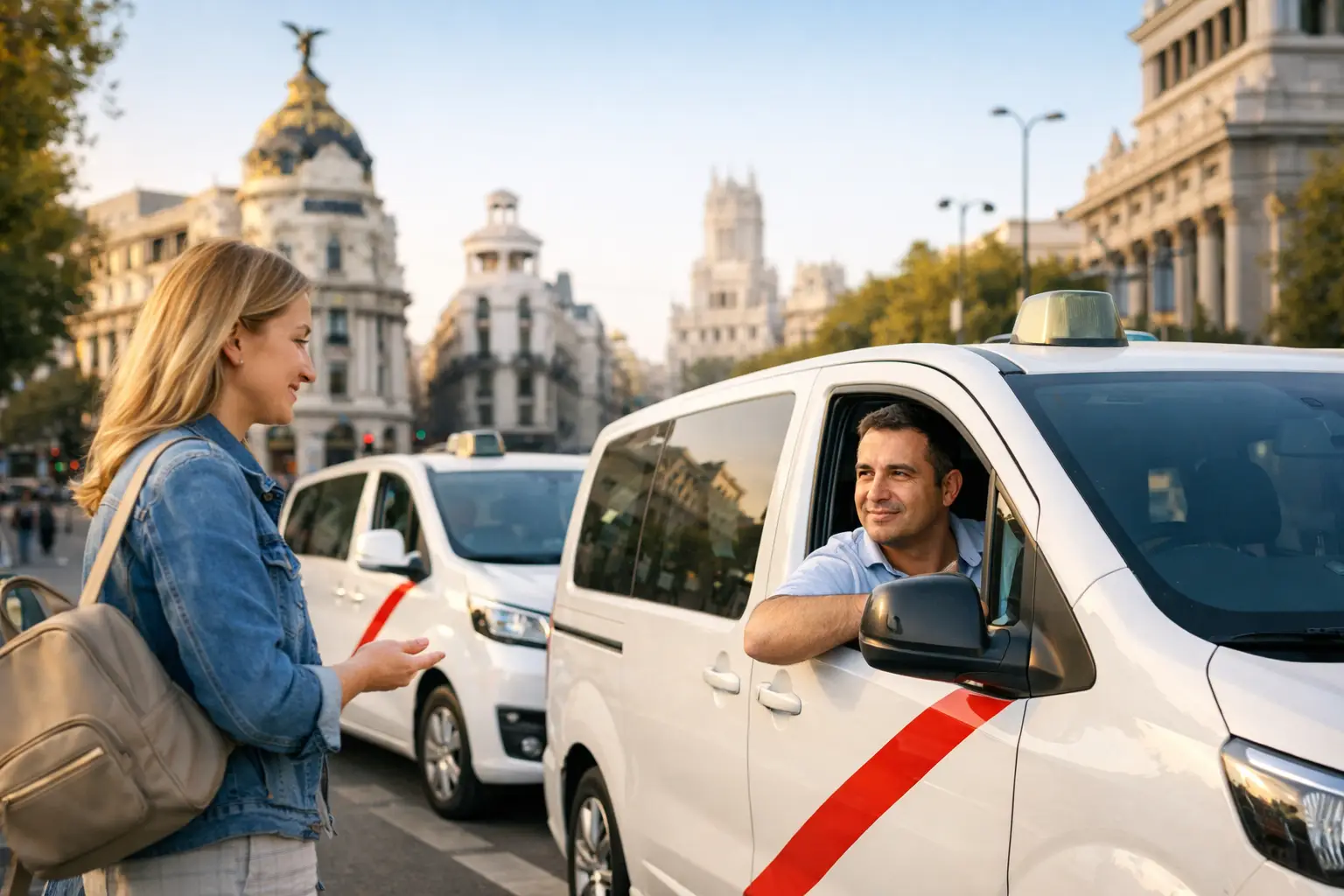
A late arrival at Madrid airport is not the moment to discover that your driver understands only a few English phrases - especially when you are carrying luggage, travelling with children, or heading to a hotel with an unfamiliar name. So, do drivers speak English Madrid visitors can rely on? Sometimes, yes. But the level of English varies considerably, and planning for clear communication is the sensible choice.
Madrid is a welcoming, international city, and many taxi and private-transfer drivers are used to overseas visitors. English is more common on airport routes, around major hotels and at business venues than it may be on an ordinary local journey. Still, it should not be assumed that every licensed driver can discuss changes to an itinerary, accessibility requirements, restaurant reservations or a day trip in detail.
Do drivers speak English in Madrid taxis?
Some do, particularly drivers who regularly serve Barajas Airport, central hotels, conference venues and visitor attractions. Others may speak enough English to confirm a destination, quote a fare or exchange basic courtesies, but not enough for a more involved conversation. This is not a question of professionalism. Taxi drivers work in a busy city and serve passengers from many countries; language ability naturally differs from person to person.
For a straightforward journey, this is rarely a problem. If you have the address written clearly, can show it on your phone, and do not need to make changes en route, basic communication is usually enough. Madrid’s official taxis are regulated, and standard city journeys are charged on the meter, giving passengers a clear framework even when conversation is limited.
The practical difficulty appears when the journey has more moving parts. Perhaps your accommodation has a pedestrian entrance rather than a visible front door. Perhaps you need a child seat, have a folding wheelchair, want to collect keys from an agent, or must arrive at an event at a precise time. In those situations, a driver who can communicate confidently in English - or a booking team that can coordinate the details beforehand - removes unnecessary uncertainty.
When English-speaking transport matters most
Airport arrivals are the most obvious example. After a flight, passengers may need help locating the right terminal exit, confirming a meeting point, loading larger luggage or understanding the route to their accommodation. A pre-arranged English-speaking service can confirm these details before landing and monitor the agreed pickup time if travel plans change.
It also matters for families and small groups. A six-passenger van can be far more comfortable than splitting people and bags between separate cars, but only if the driver knows in advance how many passengers, cases, pushchairs and mobility aids are travelling. Communicating this clearly at the time of booking allows the right vehicle to be assigned.
Business travel is another area where precision counts. A passenger may need a quiet vehicle for calls, a collection from several addresses, or transport between an office, hotel and dinner reservation. Being able to explain the schedule once, in English, is more reliable than trying to relay time-sensitive instructions from the back seat.
The same is true for trips beyond the capital. Journeys to Toledo, Segovia, Valladolid or Peñafiel can involve hotel collections, timed visits, lunch arrangements and return travel later in the day. A driver may not need to act as a guide, but clear communication makes a private day trip feel calm and properly organised rather than improvised.
English is useful, but written details are still best
Even with an English-speaking driver, precise addresses and timings should be written down. Hotel names can be similar, historic streets may have limited vehicle access, and voice messages are not always clear in a noisy arrivals hall. Send the full address, flight number where relevant, passenger count and any special requirements before the journey.
If you are booking a taxi from a rank, showing the destination on your phone is helpful. Keep the address in Spanish as well as English where possible. It reduces the risk of pronunciation causing confusion and gives the driver the exact information needed for navigation.
What to ask before booking a Madrid transfer
A good transfer booking is not only about whether the driver speaks English. It is about knowing who is collecting you, what vehicle will arrive, how the price works and what happens if your plans shift. For a standard taxi ride within Madrid, the regulated meter provides the fare structure. For longer journeys, day trips, events or bespoke arrangements, ask for an agreed price in advance.
It is worth confirming whether the service can accommodate your luggage comfortably. A group of four with cabin bags has very different space requirements from four passengers with large suitcases. If you require wheelchair access, be specific about whether the wheelchair remains occupied, folds, or needs secure storage. Genuine accessibility requires an appropriately adapted vehicle and a driver who understands safe assistance, not simply extra boot space.
Ask about language support in the context of your journey. Basic English may be sufficient for an airport collection. For real-estate viewings, medical appointments, private events, restaurant coordination or meetings where details must be understood accurately, translator accompaniment can be the better option. Arabic, English and Mandarin support can be arranged where required, allowing visitors to communicate with confidence beyond the vehicle itself.
A practical approach for travellers with limited Spanish
You do not need fluent Spanish to travel comfortably in Madrid. A few prepared details will take care of most situations. Keep your destination address, hotel telephone number and booking reference available on your phone. Make sure your device is charged before arrival, particularly if you are relying on messages to locate a driver.
For airport travel, confirm the terminal and collection instructions before departure. Madrid-Barajas has several terminals, and an agreed meeting point saves time when mobile signal, baggage delays or crowded exits complicate a last-minute conversation. If you are travelling with a group, nominate one person as the contact so messages do not become crossed.
For a return collection, agree the time in local time and state whether you need to be collected from the hotel entrance, a restaurant, a venue or a particular street. This sounds simple, but it is one of the most effective ways to prevent delays. A discreet, professional driver can only be on time when the collection information is accurate.
Avoid relying on translation apps for every detail
Translation apps are useful for simple requests, but they are not ideal for instructions involving times, routes, access needs or formal arrangements. A mistranslated message about a flight terminal or wheelchair requirement can create avoidable stress. Use an app as a backup, not as the only plan for an important journey.
For travellers who value direct communication, Madrid Mobility Group can coordinate transport by WhatsApp or enquiry, with English-speaking support and modern, immaculate taxi vans for up to six passengers. Standard Madrid taxi journeys follow regulated metered pricing, while day trips and tailored arrangements are agreed in advance so you always know what you pay.
The right choice depends on the journey
A short ride from one central neighbourhood to another may only require an address on a screen and a friendly greeting. Booking an English-speaking service is not essential for every journey, and Madrid’s taxi network remains a practical option for many visitors.
However, pre-booked communication becomes more valuable when punctuality, comfort, mobility, privacy or multi-stop planning matters. It is particularly useful after an overnight flight, for families with substantial luggage, for VIP guests, and for anyone who would rather not negotiate travel arrangements in an unfamiliar language.
Clear communication should feel like part of the service, not an extra challenge to manage. Arrange the important details before you travel, keep your destination information to hand, and your time in Madrid can begin with a calm welcome rather than a conversation you are trying to translate at the kerbside.