
Corporate Roadshow Transport Example for Spain
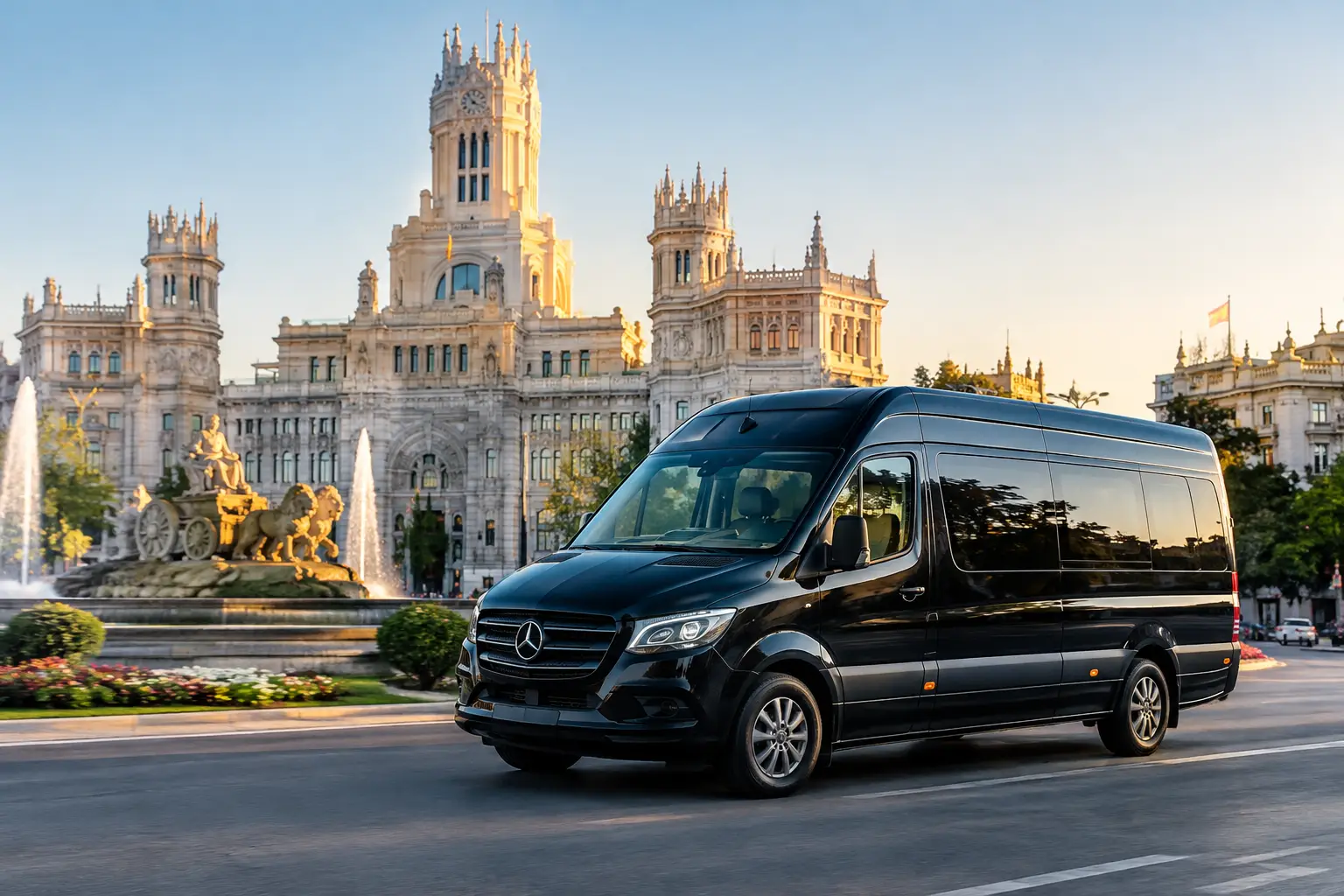
A corporate roadshow transport example is most useful when it reflects what can disrupt a real working day: an early airport arrival, senior guests with luggage, meetings that overrun, different venues, and a final transfer to another city. The answer is not simply to book a car between addresses. It is to build a clear movement plan around the people, schedule and level of support required.
For a roadshow beginning in Madrid and continuing through Spain, transport should give the organiser one less operational task to manage. That means agreeing collection points, named contacts, waiting arrangements, vehicle requirements and changes of plan before the first passenger is collected.
A corporate roadshow transport example: Madrid to Valencia
Consider a company hosting a two-day investor and client programme. A small executive team arrives at Madrid-Barajas Airport in the morning, meets local colleagues in the city, visits a venue near the business district, and then travels to Valencia for an evening presentation and an overnight stay. The following day includes hotel collection, two meetings in different parts of Valencia and an onward departure.
The transport plan begins with the arrival details, not a generic pick-up time. The booking coordinator provides flight information, passenger numbers, luggage expectations and a nominated contact who can make practical decisions if the programme moves. The driver or transport coordinator has the agreed collection instructions, while the organiser knows what to do if the flight is delayed or passengers leave through a different point than expected.
For two or three passengers travelling light, an executive saloon may suit the first part of the itinerary. If the team is carrying presentation cases, samples or several large suitcases, a passenger van can be more appropriate even for a small group. Choosing the larger option is not about appearance. It protects comfort and avoids turning luggage into a last-minute problem.
After the Madrid meetings, the same booking can be planned as a private intercity transfer to Valencia. This allows the group to leave from the final meeting address, travel together, prepare for the next event or simply rest, and arrive at their hotel rather than navigate station transfers with luggage. Rail may be preferable for some programmes, particularly where passengers are joining from different locations or the timetable works neatly. A private road transfer is often the stronger choice when door-to-door timing, privacy, multiple stops or equipment transport matter more.
The key point is that the Madrid and Valencia portions are treated as one itinerary with clearly defined service periods, rather than unrelated journeys booked at the last minute.
Start with the schedule that actually exists
Roadshow schedules often look straightforward on paper and become complicated once invitations, security procedures, venue access and hospitality are added. A useful transport brief separates fixed commitments from flexible ones.
Fixed commitments include flight arrivals, presentation start times, booked train departures and confirmed venue access windows. Flexible elements may include the end of a meeting, a client lunch, a hotel check-in or a short stop to collect materials. Both matter, but they should not be priced or staffed as though they carry the same certainty.
Allow sensible transfer windows between appointments. A route that appears short can involve hotel forecourts, visitor registration, restricted access, luggage loading and locating attendees who have stepped away from reception. Where a meeting is particularly time-sensitive, it can be sensible to arrange an earlier arrival and use the waiting time for coffee, preparation or calls nearby.
For an itinerary spanning several cities, distinguish a realistic day trip from a multi-day programme. Toledo, Segovia, Ávila and Valladolid can work well alongside a Madrid base when the meeting schedule permits. Barcelona, Málaga, Seville, Bilbao or Galicia usually require a properly planned intercity or multi-day arrangement, rather than being presented as quick additions to a busy day.
Name one decision-maker
A nominated roadshow contact prevents mixed instructions. They should be able to confirm a changed collection time, add a stop or approve additional waiting where necessary. Passenger preferences can still be recorded, but the transport team needs to know who has authority to alter the agreed itinerary.
It is equally helpful to provide venue contacts where access is controlled. A hotel concierge, event manager or office host can confirm the most practical drop-off point and avoid drivers having to circle a busy area while guests wait outside.
Match the vehicle to the working day
Vehicle selection should be based on passenger numbers, luggage, mobility requirements and how the vehicle will be used between appointments. An executive saloon suits discreet travel for individuals or small delegations. Passenger vans offer extra luggage space and a practical layout for teams travelling together. Mercedes-Benz Sprinters, minibuses and buses can support larger guest movements, conferences, site visits and coordinated arrivals.
For a roadshow with presentations or product materials, ask about the quantity and shape of the items, not only the number of bags. A group of six with cabin luggage has very different needs from six guests carrying exhibition cases. Similarly, a guest who uses a wheelchair or has reduced mobility may require an adapted vehicle and specific assistance arrangements. These details should be confirmed in advance so that a suitable configuration and availability can be checked.
Child seats can also be requested for executives travelling with family, subject to prior arrangement. If a guest needs language support, an English- or Arabic-speaking driver may be requested, while Mandarin translator accompaniment can be arranged where available. These are useful additions when confirmed early, not assumptions to leave until the collection point.
Agree the service model before quoting
A roadshow quotation should make clear what is being booked. A regulated licensed taxi journey may be charged under the applicable taxi fare structure. Executive chauffeur, private intercity, van, minibus and bus services are commonly quoted as pre-arranged private transport according to the itinerary, vehicle type, service duration, route and requested arrangements.
The distinction matters because a one-way transfer and a vehicle retained for several appointments are different services. A transfer quote should state the agreed collection and destination points. A retained-service quotation should explain the scheduled hours, included itinerary and any waiting allowance or additional time arrangements. Tolls, parking, overnight requirements, airport collection procedures and other foreseeable costs should be addressed clearly where relevant.
This is not administrative detail for its own sake. It allows an organiser to compare options fairly and explain the plan internally without guessing what is included. If the programme is still moving, request a provisional itinerary and identify the elements most likely to change. The final confirmation can then reflect the service actually required.
Build guest care into the movement plan
Senior visitors notice the small points: whether the collection instructions are understandable, whether the vehicle has enough room, whether the driver knows the venue entrance, and whether someone can respond when a plan changes. Good coordination is quiet. Passengers should not need to negotiate each leg of a pre-arranged roadshow while preparing for a meeting.
For larger groups, it may help to issue guests with a short transport note containing the collection location, departure time, organiser contact and a simple instruction for late arrivals. Keep personal information to the minimum needed for the journey. If live journey tracking is requested for a selected arrangement, confirm beforehand whether it is available and how it will be shared.
Madrid Mobility Group can coordinate private roadshow transport from Madrid to destinations across Spain, whether the programme calls for an executive saloon, van, Sprinter, minibus, bus or an adapted vehicle. The practical value is a single, clearly arranged transport plan shaped around the itinerary rather than a series of disconnected bookings.
What to send with a roadshow enquiry
An effective enquiry does not need to be lengthy, but it should cover the dates, approximate timings, collection and destination addresses, passenger count, luggage, key venues and any accessibility or language requests. Include flights or rail details where they affect collection, plus the nominated decision-maker's contact details.
If the programme is not final, say so. A provisional route can be reviewed while the event schedule is being confirmed, with vehicle suitability and availability checked before booking. The most helpful roadshow plan is the one that leaves room for real-world changes while making the responsibilities, timings and costs clear from the outset.