
Are Vehicles Wheelchair Accessible? What to Check
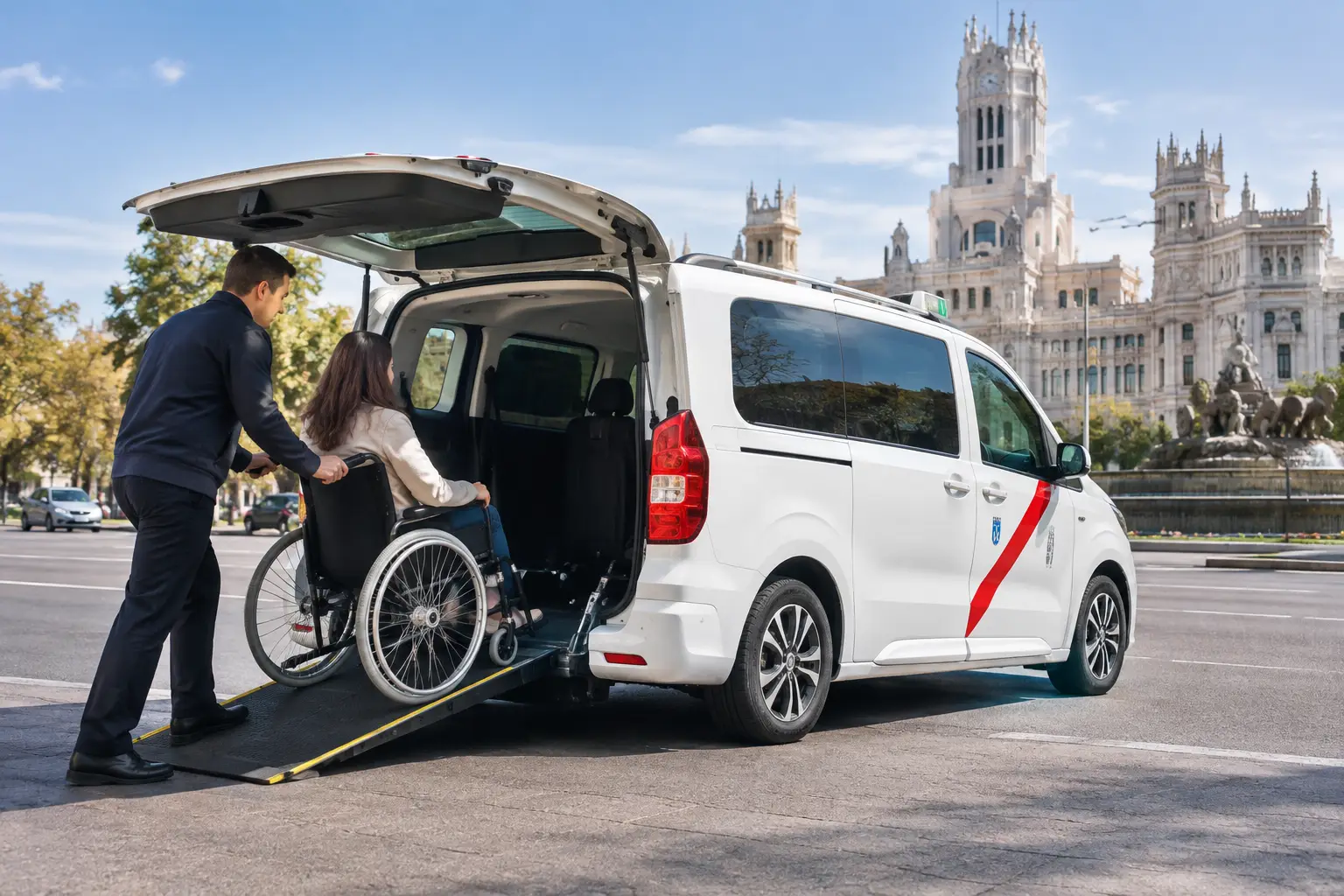
A vehicle may look spacious and still be unsuitable for a wheelchair user. So, are vehicles wheelchair accessible? The honest answer is: some are, but accessibility depends on the vehicle’s adaptation, the wheelchair itself, the passenger’s transfer needs and the journey being planned. A standard people carrier with a large boot is not automatically a wheelchair-accessible vehicle.
For airport collections, a day trip from Madrid, or a longer private journey across Spain, the detail agreed before booking makes a real difference. A properly planned transfer should support a comfortable, dignified journey from door to door, rather than leaving practical questions to be solved at the kerb.
Are vehicles wheelchair accessible by default?
No. Wheelchair accessibility is a specific vehicle feature and service arrangement, not a general description for any large car, taxi van, minibus or coach. An adapted vehicle may have a ramp or powered lift, a suitable entry height, a wheelchair restraint system and anchorage points designed to keep the wheelchair secure during travel. It also needs enough interior space for the passenger, their chair and any companions or luggage.
Some passengers travel seated in their wheelchair throughout the journey. Others can transfer into a standard vehicle seat and need the wheelchair folded or stored securely. These are different requirements, and the right vehicle for one may be inappropriate for the other.
This is why it is sensible not to rely on broad labels such as “accessible transport” without asking what the arrangement involves. Clear information gives the transport coordinator the chance to assess suitability before confirming the service.
What makes a vehicle genuinely suitable?
A genuinely suitable arrangement starts with safe access. For a passenger travelling in their wheelchair, that normally means a purpose-adapted vehicle with a ramp or lift and sufficient headroom and internal manoeuvring space. The wheelchair should be secured using the appropriate restraint system, rather than simply being held in place by a passenger or luggage.
The layout matters as much as the equipment. A power wheelchair may be considerably heavier and larger than a manual folding chair. A reclining chair, specialist seating, head support or a high back can affect the space required. The passenger’s height and comfort also matter on a longer route, particularly where rest stops need to be considered.
There is a practical trade-off between seating, luggage and wheelchair space. A vehicle that accommodates several passengers may have reduced luggage capacity once a wheelchair position is in use. For families or groups travelling with suitcases, pushchairs, mobility equipment or sports bags, this should be planned as part of the booking rather than assumed.
The details to share before booking
The most useful booking enquiry is specific but straightforward. Explain whether the passenger will remain in the wheelchair or transfer to a seat, then provide the wheelchair’s approximate dimensions and weight. A photograph can also help a coordinator understand the chair type and any unusual features.
It is helpful to mention whether the chair is manual, folding, electric or a mobility scooter. If it is electric, confirm whether it can be folded, whether the battery is fixed, and whether there are any handling instructions. Do not expect a driver to dismantle equipment that is not designed to be dismantled, or to lift heavy powered mobility equipment without the appropriate vehicle and arrangements.
Also share the number of passengers, the amount of luggage, collection and destination addresses, flight or train details where relevant, and any stops planned along the way. For longer journeys, explain if regular comfort breaks are needed or if hotel access presents a particular challenge, such as steps at the entrance.
These details are not unnecessary formality. They help ensure that the vehicle requested matches the journey, especially when travelling from Madrid to destinations such as Málaga, Seville, Granada, Marbella or other cities across Spain.
Consider the full journey, not just the vehicle
An accessible vehicle is only one part of an accessible transfer. The collection point needs enough space for the vehicle to stop safely and deploy its ramp or lift. Busy hotel entrances, narrow streets and underground car parks can create constraints that need an alternative pick-up point.
At the destination, the same questions apply. A ramp-equipped vehicle can deliver a passenger to an address, but it cannot remove steps at a building entrance or make an inaccessible venue suitable. If a restaurant, conference venue, private home or hotel has limited step-free access, it is worth confirming this directly before the journey.
For a private day trip or multi-day itinerary, accessibility planning should include the destinations and stops as well. Historic centres can have cobbled streets, slopes and restricted vehicle access. A well-organised route may need to balance sightseeing ambitions with practical drop-off locations, accessible toilets, rest periods and time for boarding.
Comfort, safety and communication on longer trips
Long-distance road travel asks more of both passenger and vehicle than a short city transfer. Positioning, temperature, journey duration and the opportunity to stop comfortably can all affect the experience. Passengers who remain in a wheelchair may have particular seating, pressure-relief or medication routines that should inform the schedule.
It is sensible to allow realistic journey time rather than trying to fit a complex transfer around an overly tight plan. A professional transport arrangement can account for agreed stops, traffic conditions and the time needed for safe boarding and alighting. Flexibility is especially valuable when a route includes several hotels, appointments or family members joining at different locations.
Clear communication helps international visitors feel prepared. If a traveller or family member prefers to communicate in Arabic, English or Mandarin, language support may be requested in advance, subject to availability. The key point is to raise this early, alongside accessibility requirements, so the journey can be coordinated with care.
Questions worth asking a transport provider
Before confirming an accessible journey, ask whether the proposed vehicle is adapted for a passenger who will remain in their wheelchair, and how the wheelchair will be secured. Confirm whether a ramp or lift is provided, whether the chair’s dimensions and weight have been assessed, and how many accompanying passengers and bags can be accommodated.
Ask about the collection and destination access, particularly if there are steps, narrow entrances or restricted stopping areas. For longer routes, agree the expected schedule and comfort stops. If the journey involves a return trip, event finish time or several days of travel, clarify how changes to timings will be handled.
A provider should be comfortable discussing these practical points. Vague reassurance is less useful than a clear explanation of the proposed vehicle, boarding method and limitations. If the requirement cannot be met safely with the available vehicle, it is better to know before travel day.
When a standard vehicle may still be appropriate
Not every passenger using a wheelchair needs a wheelchair-adapted vehicle. If someone can transfer safely into a standard seat, a modern passenger van or executive vehicle may be suitable, provided the folded wheelchair and luggage can be carried securely. This option can work well for some travellers, but it should never be assumed.
The decision depends on the passenger’s comfort, ability to transfer, the type of wheelchair and the duration of the trip. A short transfer may be manageable in a different way from a full-day itinerary or a journey between cities. The passenger’s preference should lead the planning.
When arranging transport, Madrid Mobility Group can review passenger numbers, luggage, route and mobility requirements to recommend an appropriate option, subject to vehicle availability and the details provided. Sharing accurate information early gives everyone the best chance of arranging a refined and comfortable journey.
The most helpful approach is simple: describe the traveller’s needs clearly, ask how the vehicle and boarding process will work, and confirm the plan in advance. Accessibility should feel considered from the first enquiry, not like an afterthought at collection.